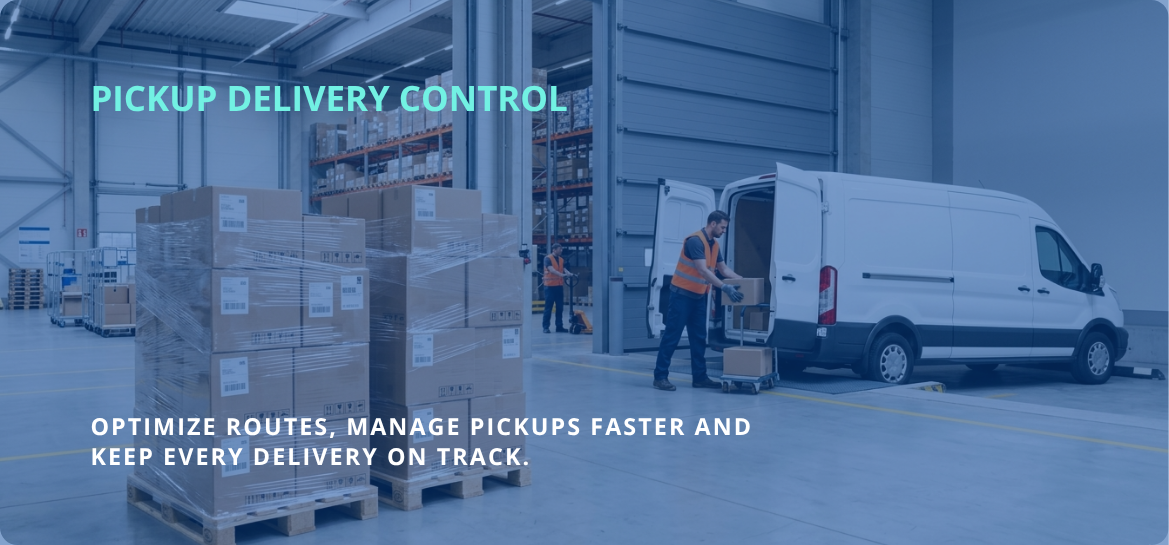
Increasing Pickup Delivery Services’ Efficiency
Pickup delivery services are more important than ever in today’s fast-paced market.
They bridge the gap between companies and clients, helping businesses provide prompt, reliable and effective service. However, managing these services can be difficult, especially when logistics teams depend on manual planning or inconsistent execution.
Advanced delivery routing software helps solve these challenges by automating planning, reducing errors and improving service quality.
It also allows companies to adapt more easily to changing consumer demands and market conditions.
The Changing Pickup Delivery Environment
The pickup delivery landscape is constantly evolving.
Consumers increasingly expect speed, reliability and convenience. To meet these expectations, businesses need to adapt their logistics operations with more connected and efficient tools.
Key strategies include:
- Real-time tracking systems to improve transparency.
- Data analytics to forecast and respond to market changes.
- Environmentally friendly packaging and vehicles to support sustainable operations.
Adapting to these changes helps businesses stay competitive while improving customer satisfaction.
Common Challenges in Pickup and Delivery Operations
Pickup and delivery services face several daily challenges.
Manual planning, limited communication and inconsistent execution can reduce efficiency and affect service quality.
Common obstacles include:
- Manual planning: time-consuming processes that increase the risk of errors.
- Inefficient route planning: poor routes can cause delays and higher costs.
- Inconsistent protocols: lack of standard procedures can produce uneven execution.
- Limited real-time communication: teams may struggle to react quickly to changes or issues.
Solving these challenges is essential for smoother operations and more reliable deliveries.
The Role of Delivery Routing Software
Delivery routing software is essential in modern logistics.
By optimizing routes, these tools help companies save time, reduce fuel expenses and improve delivery performance.
Advanced algorithms calculate efficient routes and allow teams to react to delivery priorities, traffic conditions or last-minute changes.
Main advantages include:
- Improved delivery accuracy
- Lower transportation costs
- Fewer delivery errors
- Faster response to operational changes
- Better visibility for logistics managers
With access to real-time data, managers can identify issues sooner and make better decisions.
Essential Features of Delivery Route Planner Apps
Successful delivery route planner apps include features that simplify route planning and improve daily execution.
These tools help logistics managers reduce errors, save time and manage operations with greater control.
Important features include:
- Automated route optimization
- Real-time traffic updates
- Integration with existing systems
- Driver communication tools
- Reporting and analytics
- Multi-device compatibility
Real-time tracking is especially important. It allows continuous vehicle monitoring and enables quick adjustments when traffic, weather or operational conditions change.
Improving Curbside Pickup
Curbside pickup has become a standard part of modern logistics.
It combines speed, safety and convenience, but it requires a smooth process to avoid long wait times and customer frustration.
An effective curbside pickup process should include:
- Clear communication with customers
- Accurate order preparation and verification
- Designated parking spaces for quick pickup
- Real-time updates and arrival confirmation
When managed well, curbside pickup improves customer experience, strengthens brand reputation and can support higher customer retention.
Real-World Benefits of Delivery Planning Software
Many businesses have achieved measurable improvements by using delivery planning software.
For example, a mid-sized retailer reduced delivery times by thirty percent by using real-time data for scheduling and route optimization.
Another food delivery service improved efficiency with a new route planner app and achieved:
- Lower fuel expenses
- Fewer delivery errors
- Higher driver productivity
These improvements increased customer trust and improved the overall service experience.
Best Practices for Using Delivery Planning Software
Implementing delivery planning software requires planning and internal alignment.
Before choosing a system, businesses should evaluate their current logistics procedures and identify the areas that need improvement.
Best practices include:
- Pilot the software with a small group first
- Train teams properly on the new tool
- Update the software regularly
- Collect user feedback to improve operations
- Focus on clear goals, such as reducing delivery times or fuel consumption
With the right strategy, delivery planning software can improve service quality and make operations more efficient.
Conclusion: Preparing Pickup Delivery Services for the Future
Flexibility is essential in today’s logistics environment.
Efficient delivery planning software helps pickup delivery services remain competitive, scalable and ready for changing customer expectations.
By investing in technology, businesses can improve routing, reduce manual work and strengthen operational performance.
A proactive approach to pickup delivery management supports better service, stronger customer satisfaction and long-term growth.