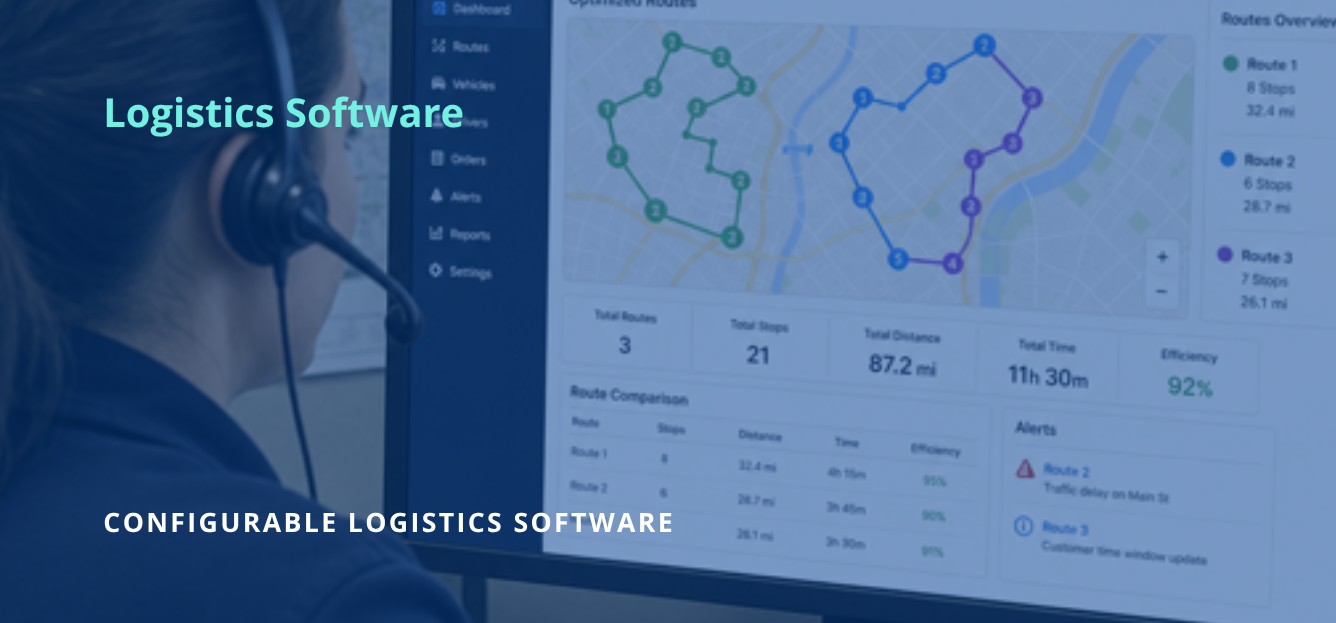
Configurable Logistics Software: Your Process, Your Rules, One Platform
Manually reconfiguring dispatch rules every time a customer, region, or carrier requirement changes wastes hours your operations team doesn't have — and rigid, off-the-shelf transportation software only makes it worse. Solves this by letting you design workflows around your actual processes, not the vendor's assumptions.
Instead of forcing dispatchers, warehouse teams, and carriers to adapt to a fixed system, a configurable platform adapts to them: custom rules, flexible integrations, and dashboards that reflect how your business actually operates. This guide breaks down what configurable logistics software is, the features that matter most, and how to choose a platform — like cadis® TMS — built to scale with your operations.
What Is Configurable Logistics Software?
Configurable logistics software is a platform that lets businesses shape workflows, rules, and reporting around their own operations, rather than forcing them into a rigid, pre-built process. It supports everything from warehousing to transportation management, adapting to your specific setup instead of the other way around. One of the biggest advantages is that customization doesn't have to run through a developer queue. Operations and IT teams can adjust dispatch rules, approval steps, and reporting views directly inside the platform — which shortens the time between 'we need this to work differently' and it actually working differently.
Platforms built around this idea — cadis® TMS among them — treat configurability as the foundation, not an add-on. If you're new to the broader category, our guide on is a good starting point before diving into configuration specifics.
Key features typically include:
Together, these features cut the time and cost of adapting your logistics software to how you actually operate — instead of forcing your operation to adapt to the software.
The Need for Personalized and Flexible Logistics Solutions
Logistics demands shift constantly, and every company's requirements are shaped by its industry, geography, and customer base.
Exist because a one-size-fits-all platform inevitably fails to accommodate at least some of those unique processes.
Matter most when volumes swing — seasonal peaks, new market entry, a sudden shift in customer expectations. A platform that can't scale up or down with you becomes a constraint exactly when you need it to be an asset.
Important aspects of personalization and flexibility include:
Firms that build on these foundations stay nimble through periods of change — and that adaptability compounds into better customer satisfaction and stronger competitive positioning over time.
Key Features of Configurable Logistics Software
The features that make configurable logistics software valuable all point toward the same outcome: less manual work, faster decisions, fewer errors. Real-time data integration lets teams act on current information instead of yesterday's spreadsheet export.
User-friendly interfaces matter more than they get credit for — an intuitive platform shortens onboarding and reduces the training burden on dispatch and warehouse staff. Automation tools then take over the repetitive parts of the job, freeing people for the decisions that actually need judgment.
Key features include:
Custom reporting turns raw operational data into trends you can act on, while seamless integration keeps every part of the logistics network — carriers, warehouses, dispatch — communicating on the same page.
Scalability rounds it out: growth shouldn't force a software migration.
Workflow Automation: Streamlining Logistics Processes
Replaces manual, repetitive steps with rules the system executes consistently — every time, without the errors that creep into manual handoffs. Dispatchers and planners get their time back for the decisions that actually require judgment.
Automated dispatch and delivery tracking are the clearest examples: shipments get allocated and monitored in real time, with far less manual coordination and much better visibility across the chain.
Benefits of logistics workflow automation:
Automation also strengthens inventory accuracy — stock levels are tracked continuously, with automatic replenishment triggers that prevent both stockouts and excess inventory — and it applies the same consistency to compliance checks, which happen quietly in the background instead of as a separate manual pass.
Digital Dispatch Systems: Real-Time Control and Visibility
Gives logistics managers real-time visibility into vehicle locations, delivery status, and emerging delays — replacing the phone-and-spreadsheet dispatch model with one dashboard that reflects what's actually happening on the road.
That transparency translates directly into faster decisions: a delay gets flagged and re-routed before it becomes a missed delivery window, rather than after.
Key features of digital dispatch systems include:
Automated route optimization is worth calling out on its own — evaluating traffic and conditions to suggest faster routes on the fly.
Paired with that keeps recalculating as real-world conditions change, dispatch stops being reactive and starts being genuinely proactive.
Integration Capabilities: Connecting Your Logistics Ecosystem
None of this works in isolation. Configurable logistics software has to connect cleanly with the ERP, WMS, and carrier systems you already run — otherwise 'configurable' just means more screens to reconcile manually.
Strong integration capabilities unify these platforms into one operational picture, so teams stop re-entering the same data in three systems and start working from a single, synchronized source of truth.
Advantages of integration capabilities in logistics include:
Connecting your logistics ecosystem this way pays off twice: day to day, in fewer data errors and faster handoffs between teams; and long term, in a platform that keeps working as you add tools instead of needing a rebuild.
See how CADIS connects your logistics ecosystem — pre-built
integrations, open APIs, and configurable workflows that fit the systems
you already run.
Process Automation in Logistics: Efficiency and Accuracy
Takes the tasks most prone to human error — data entry chief among them — and hands them to the system, which improves both speed and record accuracy at the same time.
The bigger shift is where employees' attention goes: away from repetitive processing and toward the exceptions and decisions that actually need a person.
Common advantages of process automation in logistics include:
Automation also makes workflow management more consistent — clear process paths reduce variability between teams and shifts, which shows up directly in faster turnaround times and steadier service levels.
Data Analytics and Reporting: Driving Informed Decisions
Raw operational data is only useful once it's turned into something a manager can act on. Configurable logistics software does that conversion continuously, surfacing trends and patterns that would otherwise stay buried in transaction logs.
Customizable dashboards put the right KPIs in front of the right people, and real-time analytics mean those numbers reflect what's happening now, not last week.
Key benefits of data analytics and reporting include:
Used well, this turns reporting from a monthly retrospective exercise into an ongoing input for day-to-day decisions — which is where the real competitive advantage sits.
Scalability and Adaptability: Growing With Your Business
Logistics requirements evolve as a business grows, and configurable software is built to grow alongside it — handling higher volumes without a drop in performance or a forced re-platforming project.
Adaptability matters just as much as raw scale: the system needs to absorb new regulations, new markets, and new operating models without a lengthy redevelopment cycle each time.
Key advantages of scalable logistics software include:
That combination — scale without disruption — is what lets operations teams focus on growth strategy instead of managing yet another software migration.
Enhancing Customer Experience with Personalized Logistics
Customers expect real-time visibility into their shipments as a baseline, not a bonus. Configurable logistics software delivers precise delivery estimates and status updates that build trust rather than eroding it after a missed window.
Personalization here means adjusting the experience to the customer, not the other way around — tailored delivery windows, proactive notifications, and communication that matches how each client actually wants to be reached.
Key elements include:
Customers who feel informed and in control are more forgiving when something does go wrong — and more likely to recommend the service when nothing does.
Compliance, Security, and Risk Management
Regulatory requirements in logistics keep multiplying, and configurable software is what makes staying current manageable instead of a constant scramble — rules and reporting formats can be adjusted as requirements change, without waiting on a vendor release cycle.
Security is inseparable from compliance here: user access controls and data encryption protect both customer information and operational data, which matters as much for trust as it does for regulation.
Key compliance, security, and risk management features include:
Risk management follows the same logic — the system flags likely bottlenecks and disruptions early enough that a contingency plan can actually be executed, rather than assembled after the fact.
Sustainable Logistics: Optimizing for the Environment
Environmental pressure on logistics operations isn't going away, and configurable software gives teams practical levers to pull rather than just a reporting obligation. Route optimization is the most direct one:
shorter, smarter routes cut fuel use and emissions together, and dynamic routing keeps adjusting as traffic and weather change.
Inventory accuracy plays a quieter role — better forecasting means less overproduction, less excess storage, and warehouses that run on less energy per unit shipped.
Key sustainable logistics features include:
None of this is only about compliance — shippers who can demonstrate real environmental performance are increasingly winning business on it, not just avoiding penalties for missing it.
Choosing the Right Configurable Logistics Software
Start with your operational goals, not a feature checklist. The right platform is the one that closes the specific gaps you're actually facing — missed windows, manual dispatch, poor visibility — not the one with
the longest brochure.
Compatibility with your existing systems is non-negotiable: check that the software integrates cleanly with your ERP and WMS, and that it can support the technologies you plan to adopt next, from IoT sensors to AI-assisted planning.
Scalability deserves the same scrutiny. A platform that fits today but can't absorb next year's volume just delays the migration problem instead of solving it. Our is a useful next step for weighing configurable platforms like against heavier enterprise suites.
When evaluating options, consider:
Software that fosters collaboration and adapts alongside your strategy delivers long-term value well beyond the initial implementation.
Implementation Best Practices and Common Pitfalls
A successful rollout starts with a real needs assessment, not a generic template — the configuration should reflect your actual process, which means someone has to map that process first.
Bring stakeholders in early. Dispatchers, IT, and end-users all see different failure points, and their input during configuration prevents rework after go-live. Training is not optional: a well-configured system still fails if the people using it don't trust it yet.
Watch out for common pitfalls:
Regular check-ins during rollout catch small misalignments before they become expensive ones — rushing the evaluation phase is the single most common way implementations underdeliver.
Future Trends in Configurable Logistics Software
Two technology shifts are already reshaping what 'configurable' means in practice. Artificial intelligence is moving from a back-office analytics tool into active decision support — predictive dispatch, anomaly detection, demand forecasting that adjusts itself.
The Internet of Things (IoT) is doing the same for visibility: sensor data flowing continuously into the platform means disruptions get flagged and managed proactively, not discovered after the fact.
Key trends to watch:
None of these trends require starting from scratch — a genuinely configurable platform absorbs them as extensions, not replacements, which is exactly the point of choosing configurability in the first
place.
Frequently Asked Questions
What is configurable logistics software?
Configurable logistics software is a TMS or supply chain platform that lets businesses design workflows, rules, and reporting around their own operations instead of adapting to a fixed process. Changes to
dispatch rules, approvals, or dashboards can typically be made by operations or IT teams directly, without a developer or a vendor release cycle.
How is configurable logistics software different from a
standard TMS?
A standard TMS often ships with fixed workflows that all customers use the same way. Configurable logistics software keeps the same core functions — dispatch, tracking, reporting — but lets each business
adjust rules, fields, and integrations to match its own processes, carriers, and compliance requirements without custom development.
Can configurable logistics software integrate with our
existing ERP or WMS?
Yes — integration is one of the main reasons companies choose configurable platforms. They're built with open APIs and pre-built connectors so they can sync with your ERP, WMS, and carrier systems,
keeping data consistent across the business instead of creating a separate silo.
How long does it take to implement configurable logistics
software?
Timelines vary with complexity, but a well-scoped rollout with a clear needs assessment, stakeholder input, and phased testing typically moves faster than a rigid, heavily-customized system — because configuration changes don't require custom development or a vendor release cycle.
Is configurable logistics software suitable for small and
mid-sized logistics companies?
Yes. Configurability is often what makes a platform practical for mid-market shippers, carriers, and 3PLs — it delivers enterprise-grade functionality without the cost and complexity of heavier enterprise
suites, and it scales up as the business grows instead of requiring a re-platform.
Build Workflows Around Your Process, Not the Other Way Around
Configurable logistics software turns rigid, one-size-fits-all systems into a platform that mirrors how your business actually runs, from dispatch to compliance to last-mile delivery. It integrates with the systems you already have, gives your team real-time data instead of guesswork, and scales without forcing a migration every time you grow.
cadis® TMS gives growing shippers, carriers, and 3PLs that flexibility without the cost or complexity of heavier enterprise suites.
Ready to build workflows around your process instead of adapting your process to someone else's software?