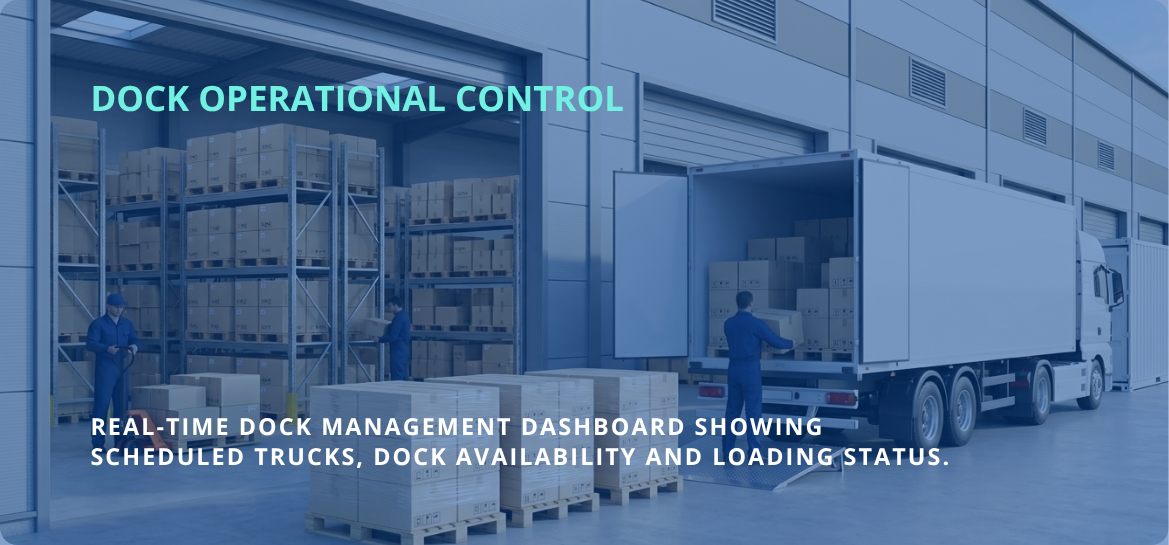
Dock Management: Key Strategies to Optimize Logistics Efficiency
Effective dock management sits at the heart of every warehouse and distribution center.As the point where goods flow in and out of a facility, the dock directlyshapes how quickly, safely, and cost-effectively operations run. Optimizing dock management helps companies increase operational efficiency, lower costs,improve service delivery, reduce delays and bottlenecks, and strengthen overalllogistics performance.
Thisarticle breaks down the key components, common challenges, and modern solutions that can transform dock operations into a genuine competitive advantage.
As the lifeblood of warehouse operations, the dock is where the flow of goods into and out of a facility is carefully managed.
Optimizing this process can help companies:
- Increase operational efficiency
- Lower costs
- Improve service delivery
- Reduce delays and bottlenecks
- Strengthen logistics performance
In this article, we examine key approaches that can transform this vital component of logistics operations.
What Is Dock Management?
Dock management refers to the organization, coordination, and control of loading and unloading activities at warehouse docks and distribution centers. It combines physical infrastructure with digital systems to move goods efficiently between transport vehicles and storage facilities. For warehouses and distribution centers to run smoothly, dependable dock systems are non-negotiable — they make it easier to load and unload cargo, ensuring goods move quickly and safely in both directions. Dock management refers to the organization, coordination and control of loading and unloading activities at warehouse docks and distribution centers.
It involves both the physical infrastructure and the digital systems used to move goods efficiently between transport vehicles and storage facilities.
For warehouses and distribution centers to run smoothly, dock systems are essential.
They make it easier to load and unload cargo, ensuring goods are transported quickly and safely from vehicles to the warehouse, and vice versa.
Key Components of an Efficient Dock System
Anefficient dock system brings together several elements that must work in syncto avoid delays and bottlenecks: dock doors, dock levelers, dock seals, dockshelters, and dock management software. Each component plays a distinct role inkeeping the flow of goods smooth, safe, and reliable.
These elements include:
- Dock doors
- Dock levelers
- Dock seals
- Dock shelters
- Dock management software
Each component plays a role in maintaining a smooth, safe and reliable flow of goods.
Dock Doors
Dock doors are the entry points to your warehouse.
Keeping them properly maintained and automated helps avoid costly downtime and supports more efficient day-to-day operations.
Making sure they are properly maintained and automated can help avoid costly downtime and support more efficient warehouse operations.
Dock Levelers
Docklevelers bridge the gap between a truck and the warehouse floor, enabling saferand more efficient loading and unloading while reducing operational frictionduring cargo handling.
They allow for safer and more efficient loading and unloading, reducing operational friction during cargo handling.
The Role of Dock Management Software
Modern dock management software is central to maximizing dock performance. It simplifies scheduling, improves communication across the logistics chain, and provides real-time visibility into dock activity — supporting decision-making, performance tracking, operational planning, resource allocation, and issue detection. By centralizing dock information, companies can manage operations with more accuracy and responsiveness. Modern dock management software is essential for maximizing dock operations.
It simplifies scheduling, improves communication between all participants in the logistics chain and provides real-time visibility into dock activity.
This technology gives logistics managers more control by offering information that supports:
- Decision-making
- Performance tracking
- Operational planning
- Resource allocation
- Issue detection
By centralizing dock information, companies can manage operations with greater accuracy and responsiveness.
Common Challenges in Dock Management
The effectiveness of dock operations may be limited by several issues.
Manual Planning
Many logistics managers still rely on manual processes, leading to inefficiencies, inconsistencies, longer planning times, and a greater risk of human error.
This can lead to:
- Inefficiencies
- Inconsistencies
- Longer planning times
- Greater risk of human error
Lack of Real-Time Communication
Without real-time updates, coordination between teams becomes more difficult.
This can create delays when teams are not immediately aware of changes, problems or operational priorities.
Execution Variability
Relying heavily on individual dispatchers can lead to inconsistencies in execution.
Different working styles or manual decisions may increase the risk of errors across shifts, sites or teams.
Inadequate KPI Monitoring
Without clear Key Performance Indicators, identifying bottlenecks and performance drops becomes more difficult.
KPI monitoring is essential to understand where dock operations can be improved.
Innovative Dock Solutions for Better Efficiency
Using creative dock solutions is crucial to overcoming these challenges.
Modern tools and processes can transform dock management by increasing visibility, reducing manual work and improving coordination.
Automation in Dock Management
Automated systems minimize human error and drastically cut planning time, enabling more efficient loading and unloading, better resource allocation, faster planning, fewer operational errors, and more consistent execution.
By automating scheduling and dispatching, logistics managers can support:
- More efficient loading and unloading
- Better resource allocation
- Faster planning
- Fewer operational errors
- More consistent execution
Automation helps teams move away from manual workflows and create a more controlled dock environment.
Real-Time Communication Tools
Real-time communication tools improve coordination across the logistics chain.
They allow instant updates and alerts, ensuring that everyone is aware of changes or problems and can respond quickly.
This improves:
- Team alignment
- Response times
- Issue resolution
- Service reliability
- Operational transparency
KPI Monitoring and Performance Tracking
Monitoring dock performance requires the creation and application of precise KPIs.
Integrated software solutions can provide dashboards and reports that offer insights into operational efficiency.
These tools help managers:
- Identify bottlenecks
- Detect performance drops
- Resolve problems faster
- Track improvements over time
- Support better decision-making
Clear KPI monitoring gives logistics teams the visibility they need to manage dock performance more effectively.
Scalability and Adaptability in Dock Management
Scalability and adaptability are essential for CEOs and supply chain directors.
A scalable dock management system can grow with the company and adjust to changing market demands.
This helps companies maintain efficiency and effectiveness over time, even as operations become more complex.
Why Scalability Matters
A scalable system supports business growth, changing volumes, multiple sites, new operational requirements, and long-term process improvement.
- Business growth
- Changing volumes
- Multiple sites
- New operational requirements
- Long-term process improvement
By adapting to business needs, dock management systems can help companies remain flexible and competitive.
Digital Transformation in Dock Management
Digital transformation in dock management means using technologies such as IoT, AI and machine learning to improve operations.
These technologies provide valuable data and predictive analytics, helping managers take a more proactive approach to decision-making.
Centralized Data for Better Visibility
Centralizing data makes comprehensive reporting and analysis possible.
This approach improves visibility throughout the logistics chain and supports strategic decision-making.
It also helps businesses adjust more quickly to changes in demand.
Data-Driven Decision-Making
With better access to operational information, companies can make decisions based on real-time data rather than assumptions.
This improves:
- Planning accuracy
- Resource management
- Performance analysis
- Operational responsiveness
- Strategic control
The Future of Dock Management
The future of dock management is closely linked to additional automation and integration.
As technology advances, logistics operations will become more interconnected, with a stronger focus on efficiency and sustainability.
Sustainability and Social Responsibility
It is becoming increasingly important to incorporate social and ecological responsibilities into dock management procedures.
Sustainable dock solutions can help reduce negative environmental effects while also improving customer satisfaction and brand reputation.
Sustainability in dock management may involve:
- More efficient operations
- Reduced waste
- Better use of resources
- Improved planning
- More responsible logistics practices
Strategic Growth Through Innovative Dock Solutions
Innovative dock solutions that prioritize strategic growth and flexibility can help companies stay competitive in a rapidly changing market.
By consistently looking for new ways to optimize dock operations, businesses can support:
- Long-term success
- Higher profitability
- Better service quality
- Stronger operational resilience
- Greater adaptability
Dock management is not only about improving individual operational metrics. It is also about building a logistics system that can respond to market changes and support future growth.
Frequently Asked Questions About Dock Management
What is dock management in logistics? It's the organization, coordination, and control of loading and unloading activities at warehouse docks, combining physical infrastructure with digital scheduling and tracking systems.
What software features improve dock management the most? Real-time scheduling, automated alerts, KPI dashboards, and integration with existing warehouse management systems.
How does automation reduce dock bottlenecks? It removes manual scheduling errors, speeds up planning, and ensures more consistent execution across shifts, sites, and teams.
Conclusion: Building a More Efficient Dock Management System
Optimizing dock management for efficiency means creating a robust and flexible logistics system.
By adopting modern dock solutions, using technology and emphasizing sustainability, supply chain directors, logistics managers and CEOs can significantly improve productivity and service quality.
Investing in cutting-edge dock management systems is essential for companies that want to succeed in the logistics sector.
In a market where efficiency and flexibility are critical, optimized dock management can open the door to strategic expansion, innovation and stronger logistics performance.