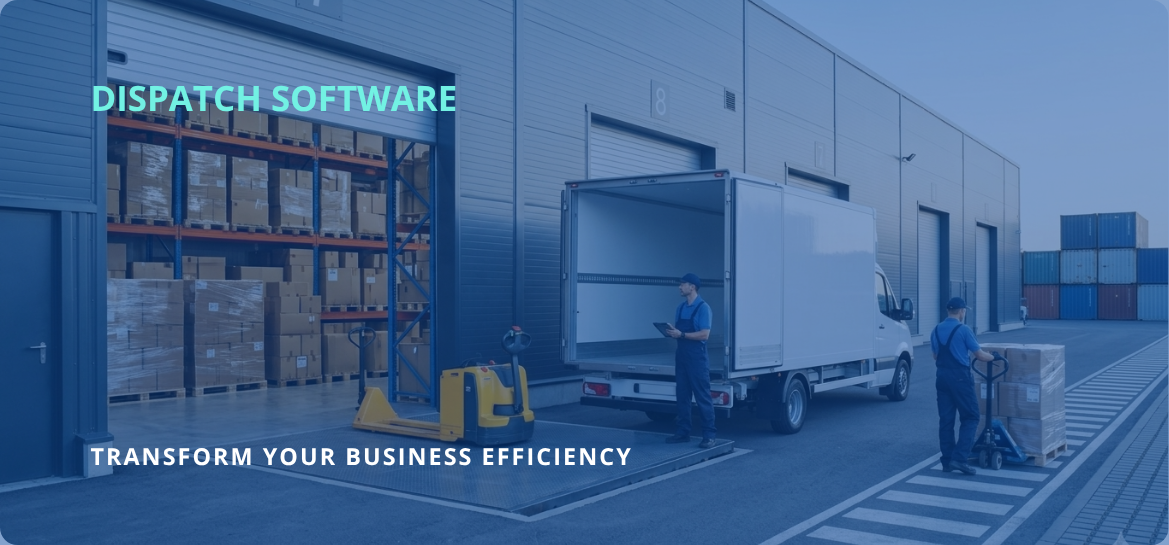
Dispatch Software: What It Is and How It Improves Logistics Operations
Efficiency is crucial in today’s fast-paced logistics industry.
Dispatch software is changing how companies operate by automating tasks, reducing manual planning time and improving the way fleets, routes and deliveries are managed.
By reducing human error, this type of software helps improve service quality. It also supports better route optimization, increases delivery accuracy and can lower fuel expenses.
In this article, we review:
- What dispatch software is
- Its main features
- How it transforms logistics operations
- The role of route optimization
- The benefits of fleet dispatch software
- Key challenges and implementation factors
- Future trends in dispatch and route optimization software
Dispatch Software: What Is It?
Dispatch software is a digital tool used to manage logistics operations more efficiently.
It automates and optimizes resource allocation in real time, including:
- Route planning
- Scheduling
- Delivery tracking
- Fleet monitoring
- Alerts and notifications
By centralizing these tasks, dispatch software improves coordination across the logistics process.
It also increases operational visibility by bringing key logistics components into one platform.
Key Capabilities of Dispatch Software
Dispatch software gives logistics managers better control over delivery status and potential disruptions.
Its key capabilities include:
- Route planning and scheduling automation
- Integration with existing enterprise systems
- Real-time fleet tracking and monitoring
- Alerts and notifications for loading dock and road problems
These features improve team communication, speed up responses to unexpected changes and help logistics operations adapt to the demands of different industries.
Essential Elements of Modern Dispatch Software
Modern dispatch software includes features designed to improve logistics management, streamline workflows and reduce manual labor.
Real-Time Data Analytics
Real-time data analytics helps managers understand:
- Fleet performance
- Operational bottlenecks
- Delivery times
- Resource usage
- Service quality
This allows teams to make faster and more informed decisions.
Real-Time Tracking
Real-time tracking provides visibility into:
- Delivery status
- Vehicle location
- Route progress
- Potential delays
This makes logistics operations more responsive and easier to manage.
Route Optimization
Route optimization uses algorithms to identify efficient routes.
This can help:
- Shorten delivery times
- Reduce fuel consumption
- Improve delivery reliability
- Support more sustainable operations
Customizable Templates
Dispatch software often includes customizable templates for scanning and proof of delivery.
These templates help support:
- Standardization
- Compliance
- Process consistency
- Operational accuracy
Alerts and Notifications
Instant alerts and notifications keep teams and stakeholders informed.
This helps companies react quickly to problems on the road, at loading docks or during delivery operations.
Main Features of Dispatch Software
Essential features of dispatch software include:
- Analytics and insights from real-time data
- Route optimization capabilities
- Customizable process templates
- Instant alerts and notifications
- Fleet tracking and monitoring
- Integration with existing systems
- KPI tracking and dashboards
Because dispatch software is adaptable and scalable, logistics teams can maintain control as market conditions change and operations grow.
How Dispatch Software Transforms Logistics Operations
Dispatch software transforms logistics operations by automating crucial procedures.
This reduces manual intervention, lowers errors and improves speed and accuracy.
It also improves operational visibility. Managers can see each stage of the logistics chain in real time, resolve issues faster and streamline processes.
Key Operational Improvements
Dispatch software supports logistics teams through:
- Real-time operational visibility
- Automated and efficient route planning
- Smooth team communication
- Connectivity to current systems
- Increased client satisfaction
Overall, dispatch software helps logistics operations become more efficient, responsive and customer-focused.
Route Optimization Software: Increasing Productivity and Cutting Expenses
Route optimization software improves logistics efficiency by identifying the most effective routes.
This reduces:
- Travel time
- Fuel consumption
- Operating costs
- Delivery delays
The software evaluates variables such as traffic patterns and delivery windows. This helps each vehicle follow the best path and improves delivery reliability.
Dynamic Rerouting
Dynamic rerouting allows drivers to avoid traffic jams or delays in real time.
This flexibility supports:
- Schedule adherence
- Customer satisfaction
- Better resource allocation
- Faster responses to unexpected events
Main Advantages of Route Optimization Software
The main advantages of route optimization software include:
- Lower fuel expenses
- Increased delivery dependability
- Dynamic rerouting
- Better resource allocation
- Reduced environmental impact
Route optimization also lowers fuel emissions, supporting more environmentally responsible business practices.
Fleet Dispatch Software: Improving Visibility and Management
Fleet dispatch software is essential for efficient fleet management.
It provides a clear overview of vehicles, routes and deliveries so managers can oversee operations effectively.
By centralizing fleet data, dispatch software reduces manual oversight and replaces outdated Excel sheets with real-time information.
Better Dispatcher-Driver Communication
Fleet dispatch software improves coordination between dispatchers and drivers.
Easier communication helps reduce:
- Delays
- Misunderstandings
- Manual follow-ups
- Operational inefficiencies
Optimized Resource Allocation
Fleet dispatch software supports resource allocation by assigning suitable vehicles to each delivery.
This can reduce wear and tear and extend vehicle lifespan.
Main Advantages of Fleet Dispatch Software
The main advantages of fleet dispatch software include:
- Total fleet visibility
- Improved dispatcher-driver communication
- Optimized resource allocation
- Real-time alerts and notifications
- Longer vehicle lifespan
Real-Time Monitoring and Interaction
Real-time tracking is a major advantage in logistics.
It provides live updates on delivery status and vehicle location, making operations more responsive.
With real-time monitoring, logistics teams can:
- Detect issues earlier
- Keep stakeholders informed
- Improve delivery coordination
- Respond faster to route or road problems
Automation and Error Reduction
Manual logistics procedures are time-consuming and prone to mistakes.
Dispatch software automates these processes, improving precision and productivity while allowing employees to focus on more strategic tasks.
Human error in route planning and data entry can be costly. Automation reduces these risks by standardizing procedures and supporting consistent supply chain operations.
Advantages of Automation
The main advantages of automation and error reduction include:
- Fewer manual data entry errors
- Simpler loading and dispatching procedures
- More efficient delivery routes
- Improved service quality and reliability
Automated vehicle loading and dispatching simplify workflows and reduce delivery scheduling errors.
Analytics, Dashboards and KPIs for Data-Driven Decision Making
Informed decision-making is essential in logistics management.
Dispatch software provides dashboards and real-time analytics that combine data from multiple processes.
KPIs help managers measure performance and identify areas for improvement. This supports strategic adjustments and operational efficiency.
Dashboards for Operational Visibility
Dashboards present data visually, giving managers quick access to metrics such as:
- Fleet utilization
- Delivery times
- Route performance
- Operational bottlenecks
- Service levels
This makes it easier to respond quickly to changes.
Analytics for Strategic Planning
Analytics reveal trends in historical and current data.
This helps companies:
- Predict demand fluctuations
- Optimize resource allocation
- Identify recurring problems
- Move from reactive to proactive management
Key Features for Data-Driven Decision-Making
Key features include:
- KPI monitoring for performance evaluation
- Dashboards with real-time operational insight
- Data analysis for trend identification
- Strategic planning based on insights
With these tools, companies can improve operational effectiveness and manage risks and opportunities more efficiently.
Adaptability and Scalability for Business Growth
Dispatch software supports companies that want to grow.
It adapts to changing market conditions and rising operational demands.
Scalability allows the software to support operations of different sizes. Whether used by a startup or a large corporation, it can grow with the business and reduce the need for constant system updates.
Customization for Specific Operations
Adaptability makes it possible to customize features according to company procedures.
This improves productivity and supports specific business objectives.
Important aspects of adaptability and scalability include:
- Smooth growth across several sites
- Features adapted to specific operations
- Support for different industry needs
- Minimal interference during growth stages
These capabilities give logistics companies the framework needed for smoother changes and transitions.
Compliance, Standardization and Customization
Dispatch software helps companies comply with industry regulations and maintain consistent procedures across operations.
This supports quality assurance and reduces errors.
Standardization ensures that teams follow the same procedures, lowering operational variability and improving reliability.
Customization allows companies to adapt the software to their workflows and strategic objectives.
Key Elements
Key elements include:
- Automated reporting and compliance checks
- Standard operating procedures for every branch
- Customized workflows for business procedures
- Simple integration with current systems
By balancing compliance, standardization and customization, dispatch software allows companies to function smoothly while respecting specific business needs.
Social Responsibility and Sustainability in Dispatch Software
Sustainability is essential in today’s corporate world.
Dispatch software supports environmental goals by optimizing logistics processes and reducing fuel consumption.
It also supports social responsibility by helping plan safer, more efficient routes for drivers.
Sustainable Logistics Practices
The features of the software support sustainable practices through:
- Optimized routes that reduce emissions
- Monitoring systems that improve safety
- Efficient procedures that reduce waste and resource consumption
By providing tools that support driver well-being and operational efficiency, companies can contribute to better working conditions and employee trust.
Actual Outcomes: Case Studies and Demonstrated Advantages
Real-world applications show the impact of dispatch software.
One logistics company improved operational accuracy and efficiency after addressing delivery inefficiencies with dispatch software.
A transportation company drastically reduced planning time by replacing manual procedures. Tasks that once took hours were completed in a fraction of the time.
A regional fleet manager used fleet dispatch software to optimize routes and reduce regular delivery delays by 30%.
Demonstrated Advantages
Several case studies have shown the following advantages:
- Improved delivery accuracy and fewer errors
- Better team communication
- Savings from efficient routing
- Improved operational metrics
- Higher service quality
- Support for business growth
These results highlight the strategic value of investing in systems that produce measurable operational improvements.
How to Select the Best Dispatch Software for Your Company
Choosing the right dispatch software is essential for operational excellence.
Companies should first define their needs and goals, then evaluate features, scalability and integration with existing systems.
A tailored strategy is important. The software should adapt to specific operational needs and support future growth.
Factors to Consider
Important factors include:
- An intuitive user interface for team adoption
- Integration capabilities with existing technology
- Scalability for uninterrupted growth
- Training and customer service for a smooth transition
- Vendor experience
- Client feedback
- Sector knowledge
The right dispatch software should align with operational goals, address specific needs and provide strong support.
Implementation: Change Management and Best Practices
Implementing dispatch software requires planning.
Stakeholders should be identified early and included in the process to support a smoother transition.
Successful adoption also depends on clear change management. Employees should understand the advantages, and concerns should be addressed honestly.
Key Actions for Implementation
Key actions include:
- Thorough training to prepare employees
- Gradual rollout to reduce risks
- Constant feedback to improve procedures
- Dedicated support during the transition
Recognizing progress also helps reinforce the value of the new system.
Celebrating improvements can create a more positive environment and strengthen adoption.
Future Trends in Route Optimization and Dispatch Software
The future of dispatch and route optimization software is shaped by technological advances.
These developments are expected to increase efficiency and lower expenses.
Artificial intelligence and machine learning are among the key trends. They enable predictive analytics, proactive adjustments and smarter decision-making.
Real-time data also supports dynamic route optimization, improving delivery times and resource usage.
Noteworthy Trends
Noteworthy trends include:
- AI-powered insights for proactive changes
- IoT connectivity for real-time data flow
- Augmented reality training to improve employee preparedness
- Blockchain for security, openness and confidence
Companies that use these trends can become more competitive as digital transformation continues.
In Summary: Unlocking Dispatch Software’s Complete Potential
Dispatch software is transforming logistics by improving efficiency, reducing errors and increasing service quality.
Through automation, real-time tracking and better routing, companies gain the information needed for faster planning and smarter decisions.
To unlock its full potential, businesses need a strategic approach.
By setting clear goals, understanding operational needs and staying aligned with technological advances, companies can improve current operations and prepare for future growth.