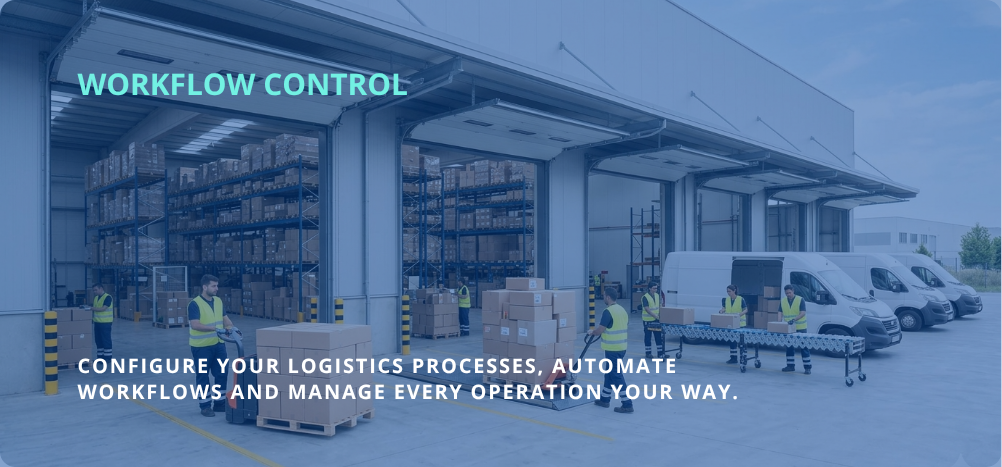
Workflow Configurations: Your Process, Your Rules, One Platform
In today’s fast-paced logistics world, efficiency is essential.
Businesses need solutions that adapt to their unique processes, and configurable logistics software provides that flexibility.
It allows companies to tailor workflows, set their own rules and manage complex operations from one platform.
Personalized logistics solutions improve customer satisfaction by adapting services to specific needs. Flexible logistics solutions also help companies respond to changing market demands, while logistics workflow automation reduces manual errors and improves efficiency.
What Is Configurable Logistics Software?
Configurable logistics software is a tool for optimizing supply chain operations by adapting workflows to specific business processes.
Instead of relying on rigid, one-size-fits-all systems, companies can modify software functions according to their needs.
This flexibility supports operations such as:
- Warehousing
- Transportation management
- Dispatching
- Inventory control
- Delivery tracking
It can also integrate with existing systems to create smoother logistics execution.
One major advantage is ease of customization. Teams can adjust workflows internally, improving operational efficiency without constant developer support.
Key features include:
- Custom workflow design
- Integration with current systems
- Real-time data access
- Multi-modal transportation management
- Scalable solutions for growth
With configurable logistics software, businesses can improve efficiency, reduce costs and adapt more easily to industry changes.
The Need for Personalized and Flexible Logistics Solutions
Logistics requirements change constantly.
Businesses need personalized logistics solutions that match their industry, customers and internal processes.
Traditional software often cannot support unique workflows. Personalized solutions close this gap by offering custom features for specific operations.
Flexibility is also essential. Flexible logistics solutions help companies scale operations up or down and maintain continuity during market shifts.
Important aspects include:
- Customizable platform functions
- Tailored dashboards and reporting
- Adaptive integration capabilities
- Scalability for growth or contraction
- Responsiveness to customer preferences
These capabilities help companies stay agile, improve operational efficiency and strengthen customer satisfaction.
Key Features of Configurable Logistics Software
Configurable logistics software includes features that help companies adapt and optimize their logistics processes.
Real-time data integration allows teams to use current information for faster decisions. Accurate data helps operations run more predictably.
User-friendly interfaces make the software easier to adopt, reducing training time and supporting faster implementation.
Automation tools streamline repetitive tasks, reduce errors and increase productivity.
Key features include:
- Real-time data integration
- User-friendly interfaces
- Workflow automation
- Custom reporting and analytics
- Seamless system integration
Integration capabilities connect different systems and improve communication across the logistics network.
Scalability also allows companies to grow without constantly changing software.
Workflow Automation: Streamlining Logistics Processes
Workflow automation in logistics reduces reliance on manual processes.
It improves speed, accuracy and consistency across daily operations.
Automation removes repetitive tasks from employees’ routines, allowing teams to focus on higher-value work. It also minimizes human error and supports smoother execution.
Key elements include:
- Automated dispatch
- Delivery tracking
- Inventory monitoring
- Compliance checks
Benefits of logistics workflow automation include:
- Reduced manual errors
- Increased operational speed
- Optimized resource allocation
- Enhanced supply chain visibility
- More time for strategic tasks
Automated systems also help companies respond faster to market changes, prevent stock issues and maintain compliance with industry standards.
Digital Dispatch Systems: Real-Time Control and Visibility
Digital dispatch systems improve logistics control by streamlining delivery assignment, tracking and communication.
They provide real-time updates on vehicle locations, delivery status and potential delays.
This transparency helps logistics managers make faster decisions and allocate resources more effectively.
Key features of digital dispatch systems include:
- Real-time shipment tracking
- Automated route optimization
- Instant driver communication
- Centralized dispatch management
- Dynamic scheduling adjustments
Real-time tracking allows teams to identify issues quickly.
Route optimization reduces transit times, while instant communication keeps drivers aligned with changing instructions.
Process Automation in Logistics: Efficiency and Accuracy
Process automation in logistics improves efficiency by reducing manual workload and minimizing errors.
Tasks such as data entry, record updates, dispatching and reporting can be automated.
This improves accuracy and allows employees to focus on core activities.
Common advantages include:
- Reduced manual workload
- Enhanced data accuracy
- Improved operational efficiency
- Streamlined logistics workflows
- Cost savings from process improvements
Automation also creates clearer workflows and more consistent execution.
This leads to faster turnaround times and better operational control.
Integration Capabilities: Connecting Your Logistics Ecosystem
Effective logistics management requires connected systems.
Configurable logistics software links different platforms, tools and processes into one logistics ecosystem.
Integration improves data flow and reduces silos. It allows departments, partners and external systems to communicate more efficiently.
Advantages include:
- Seamless communication between systems
- Better data flow and insights
- Streamlined multi-platform operations
- Reduced data silos
- Faster response times
By connecting existing tools, companies gain better visibility and stronger operational cohesion.
This supports faster decisions and more efficient workflows.
Data Analytics and Reporting: Driving Informed Decisions
Data is essential for logistics performance.
Configurable logistics software turns operational data into useful insights for planning and improvement.
Analytics help businesses identify trends, detect inefficiencies and optimize resources. Reporting tools provide visibility into KPIs and support accountability.
Key benefits include:
- Better demand forecasting and inventory management
- Enhanced supply chain visibility
- Identification of bottlenecks
- Data-driven strategic planning
- Improved customer satisfaction
Custom dashboards allow managers to monitor performance in real time.
This helps companies respond quickly to changing conditions and improve logistics efficiency.
Scalability and Adaptability: Growing with Your Business
As businesses grow, logistics needs become more complex.
Configurable logistics software is designed to scale with those needs.
Scalable solutions can support higher order volumes, larger inventories, new markets and more partners without losing performance.
Key advantages include:
- Support for increased orders and inventory
- Easier geographical expansion
- Additional modules and functionalities
- Better collaboration with partners
Adaptability is equally important.
Configurable software can adjust to new business needs, industry changes and process improvements without requiring a full system replacement.
Enhancing Customer Experience with Personalized Logistics
Customer experience is critical in logistics.
Personalized logistics solutions help companies adapt services to customer needs and improve satisfaction.
Customers expect real-time shipment information and accurate delivery estimates. Configurable logistics software supports this transparency and improves communication.
Key elements include:
- Customized delivery options and schedules
- Real-time tracking and status updates
- Tailored communication and notifications
These features help businesses provide a more customer-centric service.
Better visibility, flexibility and communication increase trust and loyalty.
Compliance, Security and Risk Management
Compliance and security are essential in logistics.
Configurable logistics software helps businesses follow regulations and protect sensitive data.
Security features such as access controls and data encryption help protect customer information and business intelligence.
Risk management tools help detect bottlenecks, delays and disruptions. They also support contingency planning.
Key features include:
- Automated compliance reporting
- Real-time monitoring and alerts
- Multi-layered security protocols
These capabilities help companies reduce risk, protect data and maintain consistent logistics performance.
Sustainable Logistics: Optimizing for the Environment
Sustainability is increasingly important in logistics.
Configurable logistics software supports greener operations by improving route planning, inventory control and transport efficiency.
Optimized routes reduce fuel consumption and emissions. Dynamic routing also helps respond to traffic or weather conditions more efficiently.
Inventory management contributes to sustainability by improving forecasting and reducing waste.
Key sustainable logistics features include:
- Route optimization
- Energy-efficient inventory management
- Support for alternative transport modes
These practices reduce environmental impact, improve brand reputation and support long-term cost savings.
Choosing the Right Configurable Logistics Software
Choosing the right software starts with understanding your business needs.
The solution should address your operational challenges and support your goals.
Compatibility is essential. The software should integrate with existing systems and support future technologies such as IoT or AI.
Scalability is also important. The system should handle growth, higher volumes and greater complexity.
When evaluating options, consider:
- Ease of use and support services
- Vendor reputation and experience
- Customization options available
- Integration capabilities
- Long-term scalability
The best solution should align with your strategy and support long-term logistics excellence.
Implementation Best Practices and Common Pitfalls
Implementing configurable logistics software requires planning.
Start with a clear needs assessment to define requirements and priorities.
Involving stakeholders early improves adoption. Logistics managers, IT teams and end users can provide useful input for configuration and rollout.
Training is also essential. Teams need to understand how to use the system effectively.
Common pitfalls include:
- Inadequate user training
- Poor alignment with business goals
- Insufficient testing before full deployment
Careful execution, clear communication and ongoing support help ensure the software delivers its full value.
Future Trends in Configurable Logistics Software
The logistics sector is evolving quickly, and configurable logistics software will continue to advance with it.
Artificial intelligence is becoming more important for automation, prediction and decision-making.
AI can help logistics teams improve planning and respond faster to changes.
IoT is also transforming logistics by providing real-time data across the supply chain. This supports better visibility and proactive management.
Key trends to watch include:
- Enhanced AI and machine learning
- Increased IoT adoption
- Greater focus on sustainability
- Continued growth of cloud-based solutions
These trends point toward more intelligent, connected and responsive logistics systems.
Conclusion: Transforming Logistics with Configurable Solutions
Configurable logistics software helps businesses manage supply chains with greater flexibility, efficiency and control.
It allows companies to adapt workflows to their own processes and respond faster to operational changes.
Integration, automation, real-time data and personalized logistics solutions improve decision-making and customer satisfaction.
As logistics continues to evolve, configurable software gives companies the adaptability needed for sustainable growth.
Transforming logistics with configurable solutions is an investment in long-term efficiency, innovation and competitiveness.